
Book recommendations (lots)
And a summer trend report live from New York City

We’ll start with a quick trend report from summer 2026 in New York City. Here’s what I’m observing on the streets of the biggest apple:
Cargo shorts
Sage-green athleisure separates
Black toenail polish
Conversations about being dehydrated
Socks with sandals
Pastel yellow
Cobalt blue
Tencel minidresses, Tencel tank tops, Tencel everything
Bikini top instead of a shirt
Raffia basket bags
1920s-style lingerie as outerwear
Jeans with the waist cut off like Mariah in the Heartbreaker video
Flip-flops
Sadly, jorts
Happily, books
Yes, books are everywhere. Physical books. I don’t know why and I’m not complaining. Love to see people sprawled on the grass or hunched on the subway clutching a rectangle of pulped wood. Love to see a hardcover peeking from a basket bag or a paperback chilling in the back pocket of a jort. Even a jort.
Below, a whole bunch of options to stuff in your jorts.
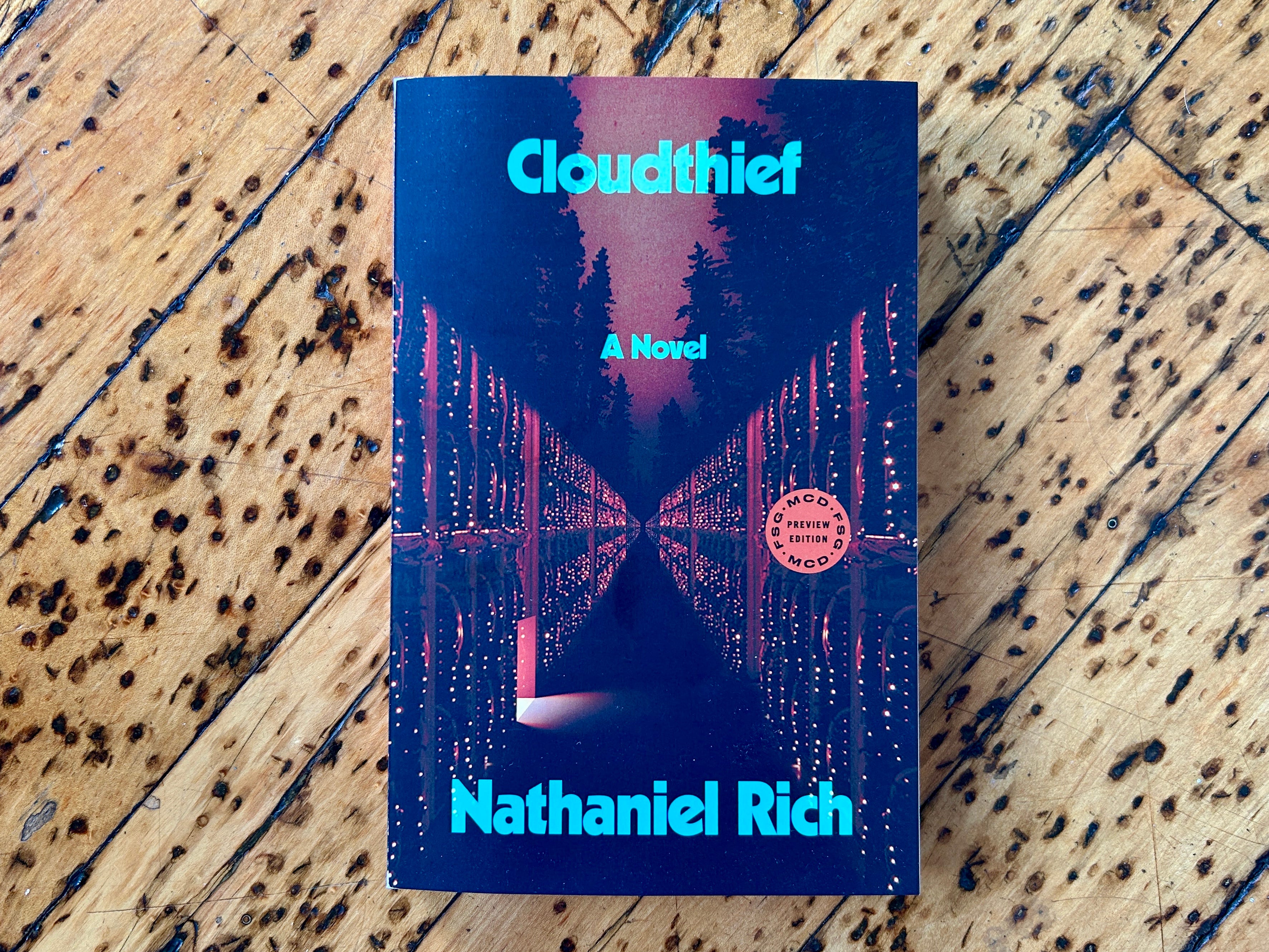
Cloudthief by Nathaniel Rich
Fiction, 2026
A few months ago the publisher FSG stupidly shut down the imprint MCD, which published all their best books. Big publishers: they never miss an opportunity to miss an opportunity.
Cloudthief was part of the MCD lineup; it will still be published but I do not know how robust the publicity engine will be, given the death of the imprint. All to say, don’t hesitate to exercise your pre-ordering finger if the endorsement below intrigues you.
The narrator is a 35-year-old magazine writer living in New York in 2014. His friend has a clever idea to rob storage units, and on one of their plundering missions the two discover a person living inside a unit. The storage-unit-hermit is a young woman called Virginia—not her real name—and the narrator quickly becomes entranced by Virginia’s “alternative lifestyle.” She comes and goes by night and earns money placing bets through illicit online prediction markets. Her grand plan is to live an untrackably private life, though we’re unsure whether her motives are noble (wrest freedom from tech autocracy) or venal (enhance her ability to commit crimes undetected) or neutrally experimental (find out whether privacy is possible).
Because Virginia is beautiful and speaks like a dire fortune cookie, the narrator falls in love. She conscripts him in a plan to rob data centers; the idea is that lifting servers from a Google warehouse will provide them with a windfall of secrets to sell on the black market. The two drive across across the country with wigs and burner phones, paying for anonymous motel rooms in cash, using false names. It is a heist novel, and the wish-fulfillment occurs not only on the level of riches but of ideology. What if a couple of troublemakers could undermine the primacy of our Silicon Valley overlords with nothing but pluck? What if history could be corrected?
I was all in on page 5, when I read this tossed-off line of description:
On the bus we passed a file of identical A-frame houses that formed a long scream: AAAAAAAAAAAAA.
A page-turner built from prose like that, mamma mia.
RIYL: Creation Lake by Rachel Kushner, caves, dry flush toilets like the kind Matt Damon uses in The Martian, Trevor Paglen, Sondheim’s “Assassins”
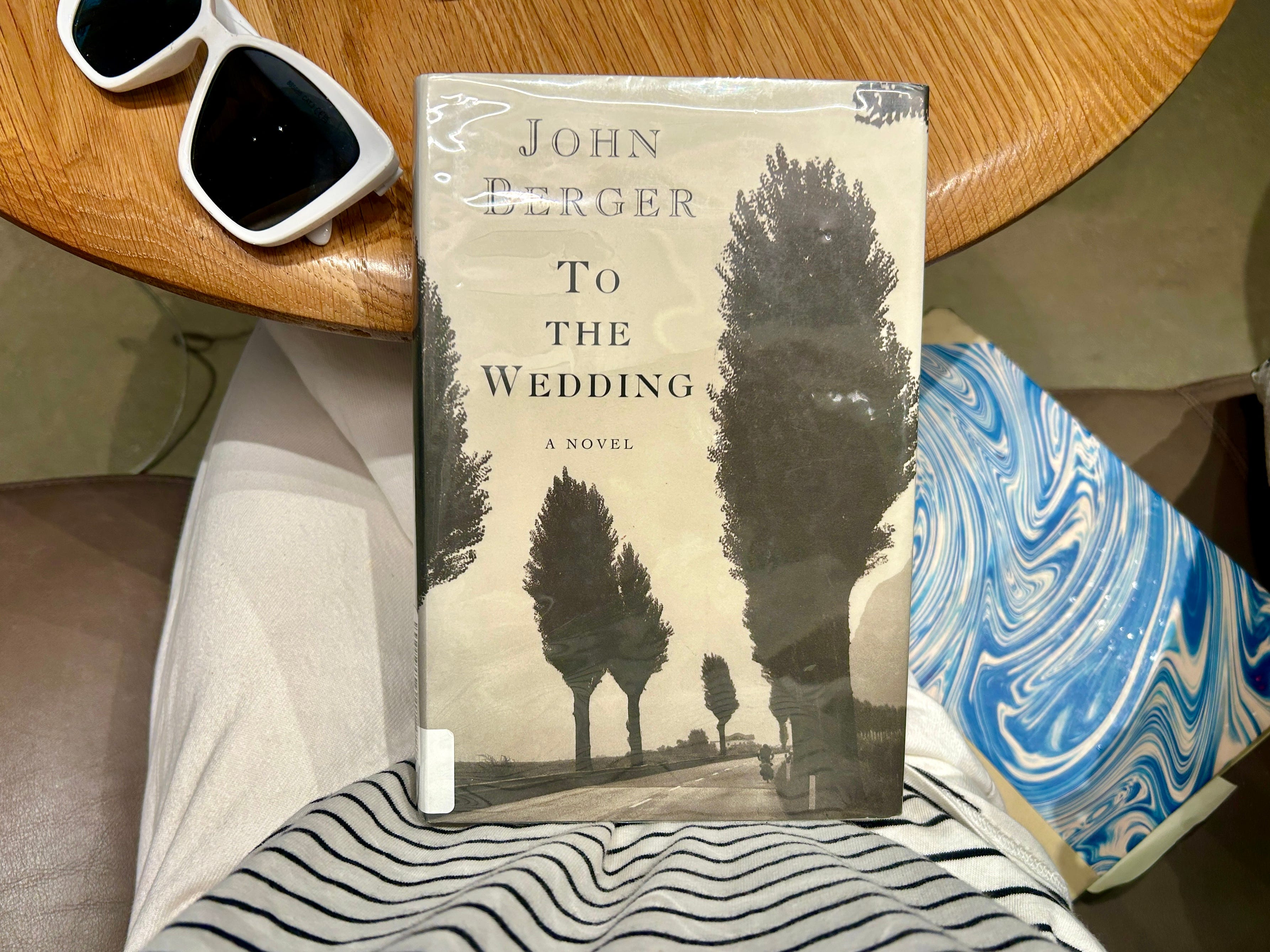
To the Wedding by John Berger
Fiction, 1995
I get the sense a lot of readers have a low tolerance for formally experimental fiction. Maybe I’m wrong. But I’ll begin with a warning label that To The Wedding is confusing for 15 pages and then reveals its logic and offers—not only transparency, but transparency of a delicate power that falls beyond the remit of third-person-limited narration.
This is true of a lot of Great Novels that carry the reputation of being opaque: 15 pages of confusion followed by an ice-bath immersion of clarity. If you’re capable of understanding a Christopher Nolan film you are overprepared for a novel like To the Wedding.
It is the early 1990s in Europe. A young couple, Ninon and Gino, are to be married in Italy. We follow the lovers as they face a tragedy with rage and ingenuity. Meanwhile, Berger cuts to Ninon’s father as he motorcycles to the wedding from France and to Ninon’s mother as she travels from Bratislava. A short and cinematic novel about work, family, sacrifice, beauty, illness, sex and death: all of life’s major concerns are present.
If you want to decode the narrative logic yourself, hell yeah. If you want me to do it for you, you widdle baby (just kidding; happy to help), here’s a simple key:
The blocks of first-person narration belong to Ninon and to the blind Greek peddler.
The blocks of third-person narration belong to Jean and Zdena, who are Ninon’s parents. Berger often refers to Jean as “the signalman” because that is his day job.
The blind Greek peddler is not directly involved in the love story. He is a clairvoyant character who dips in and out to annotate the prose.
Those new to Berger’s fiction, as I was a couple of months ago, ought to start with G. That book will rearrange all the seeds in your melon. Most people recommend his Labors trilogy as the next stop on the Berger train but my vote is Wedding.
RIYL: Grand love stories, Wong Kar-wai, Pasolini, recent European history, Annie Ernaux’s combination of sociology + passion, Shirley Hazzard, and—weirdly—Faulkner
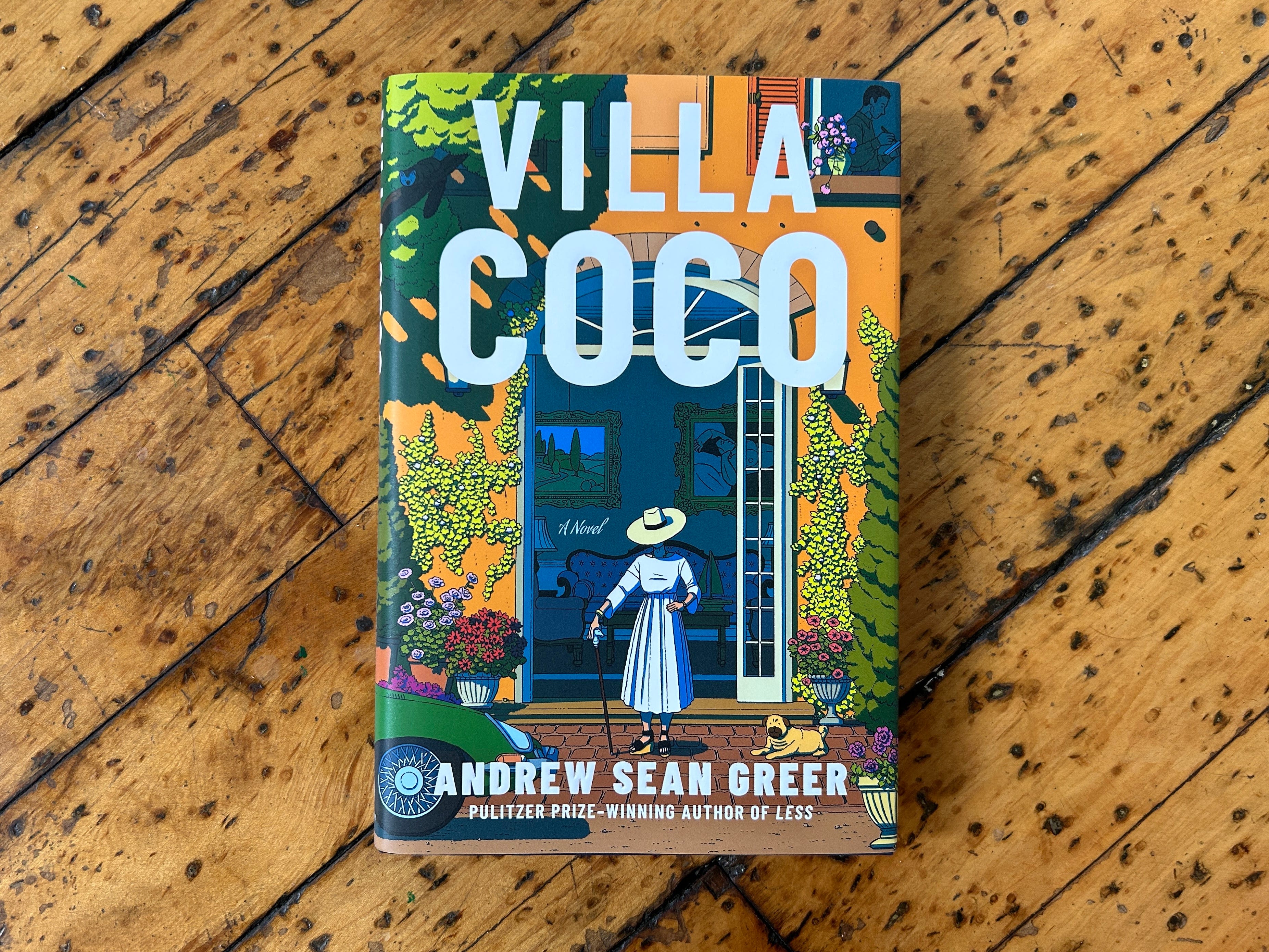
Villa Coco by Andrew Sean Greer
Fiction, 2026
Another bonbon of beach reading, and a prime example of what Kaitlin Phillips calls a lifestyle book— “lots of ideas for living tucked into it.”
A baronessa hiding in the hills of Tuscany places an advertisement for an archivist to catalogue her art collection in exchange for room and board. The ad finds its way to an American college student graduating with a degree in Archives and Record Management. The student is handsome, naive, and adrift. Finding no locally remunerative outlet for his studies, he answers the baronessa’s ad and soon finds himself alone at a little Italian train station “so fanciful you might unwrap it and find it was chocolate.”
As you may have guessed, this is a novel in the tradition of “an American travels to Europe and loses his innocence / commences his sentimental education.” (A novel in the comic subtype of the tradition, I’ll add, not the tragic.) The baronessa is 92 years old, afflicted with vertigo, indefatigable. For most of the novel we don’t even know the narrator’s name because she calls him “Giovedì” (“Thursday” in Italian) and declines to be corrected.
“Giovedì’s” primary duty is to entertain his employer and submit to her schemes. His secondary duties include rose-pruning, olive-picking, and learning to recognize a Venetian courtesan by the style of her shoes. In his spare time he studies the social customs of the fallen aristocracy and attempts to solve the (paper-thin but completely sufficient) mystery of why he’s REALLY been imported by the baronessa and whether it involves the commission of a felony, a misdemeanor, or a mere infraction.
Greer is the author of Less, a novel that was awarded the Pulitzer. It was probably fine but don’t ask me, I read it and remember nothing. The Pulitzer fiction prize is a hazardous way to navigate the literary landscape. Here I’m pleased to announce that the Molly Young Committee has recently awarded Villa Coco a prize for First Rate Opportunity to Luxuriate In a Caper (F.R.O.L.I.C).
RIYL: Marzipan, Diane Johnson’s Le Divorce, Walter Pater, Lambrusco
Postscript. Let me wedge this in: Luca Guadagnino made a movie about OpenAI that stars Andrew Garfield as Sam Altman. It was meant to be released by Amazon but after spending $40M or something on the film, they dropped it for being overly critical of Altman. (To prepare for the role, I heard that Garfield spent months studying pieces of shit…)
Very cowardly of Amazon! Just when it seemed that the film might never see the light of day, independent distributor Neon came to the rescue. Good job, Neon. I wrote some taglines for the movie poster but who knows if they’ll reach the public eye. None of this is related to Villa Coco except on the topic of Italian rascals. (Guadagnino.)
Four quick recs
Two Lives by Janet Malcolm: A lesbian psychodrama and a portrait of an era. You don’t need a preexisting interest in Gertrude Stein to love the book. In fact, it may be better if you’re indifferent to Stein—all the better to isolate and appreciate Janet Malcolm’s Triscuit-dry wit.
The Success and Failure of Picasso by John Berger: A preexisting interest in Picasso definitely required. The cover cracks me up. To read it is to subject the person across from you to the most penetrating gaze of 20th century art.

Radishes cleanse the brain: This is a short essay for The Paris Review blog, not a book. Whenever I read Nicolette Polek’s writing, I experience the strong wish that we could be neighbors. She has a way of re-enchanting the world. Here she butterflies from one topic to the next—
•A plant whose leaves taste like raw oysters
•Hildegard of Bingen
•Home insurance
•Lent
•Fire
…and connects them all with ideas as sturdy as they are lightly-spun. In one section she condenses 4k words worth of Andrei Tarkovsky analysis into 7 sentences. This is what grace in prose looks like. Gosh.
How I Achieved My Body, Mind, and Spirit Goals By Cutting Out Water: A blog post from the anonymous 21st-century prophet who goes by Father Karine. This is the last thing you need to read about wellness culture. Nobody does satire like this lady; The New Yorker should retire its “humor” column Shouts & Murmurs in defeat. One of the commenters compared her flow to a Mark Knopfler guitar solo and I think that is a fine piece of literary criticism.
Sometimes I mock up my favorite Father Karine lines on Zazzle garments. Ha ha.

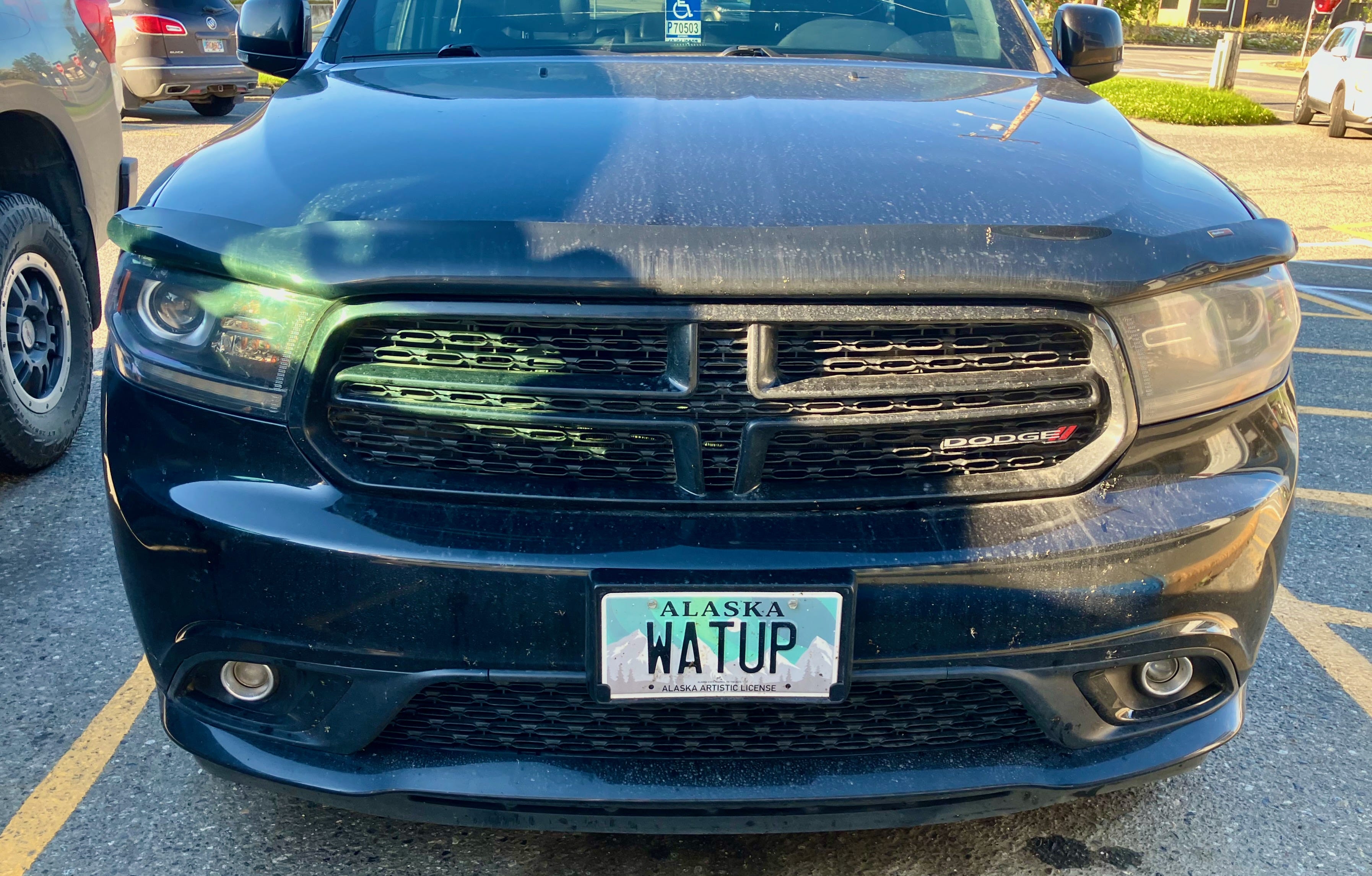
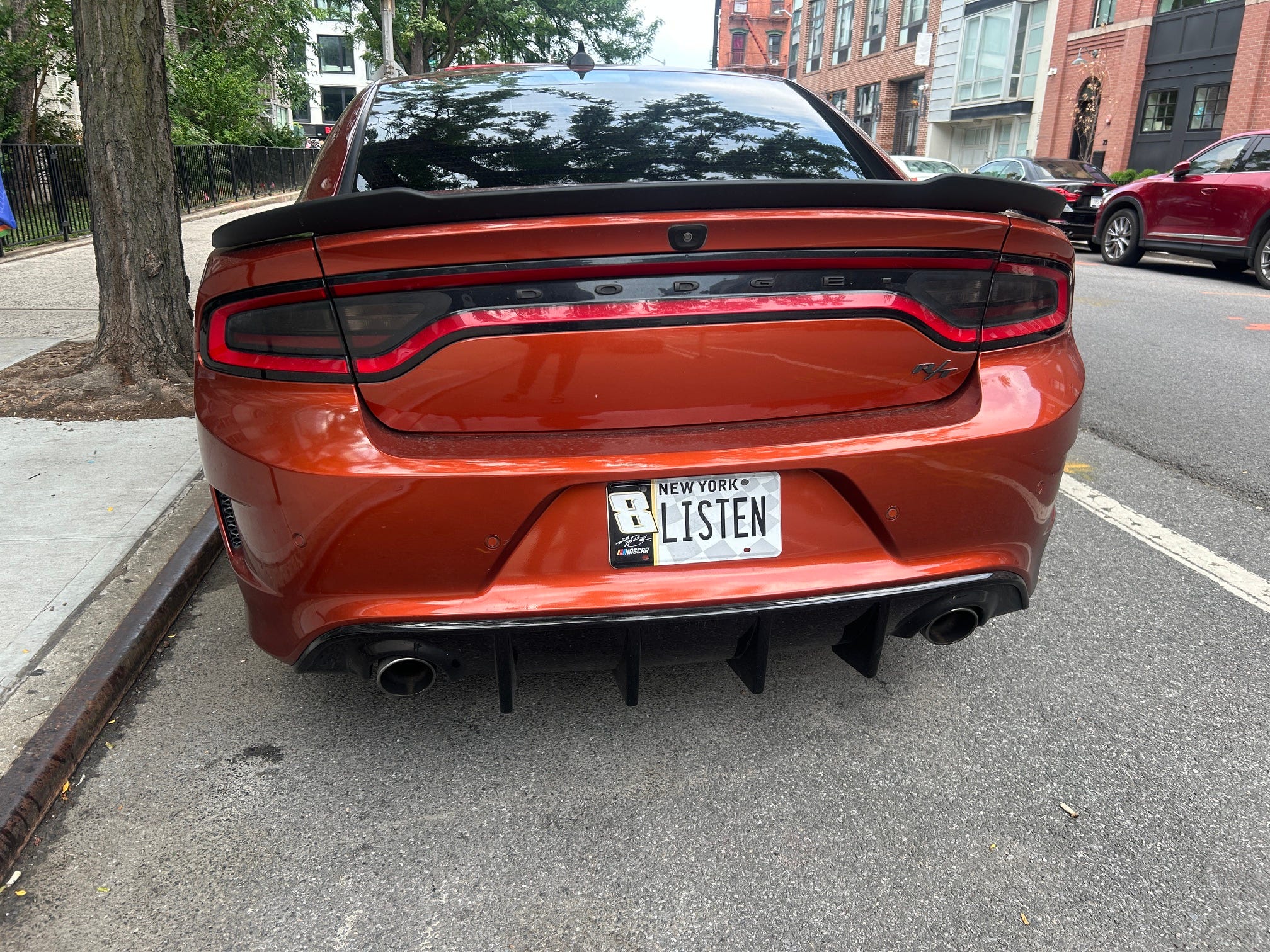
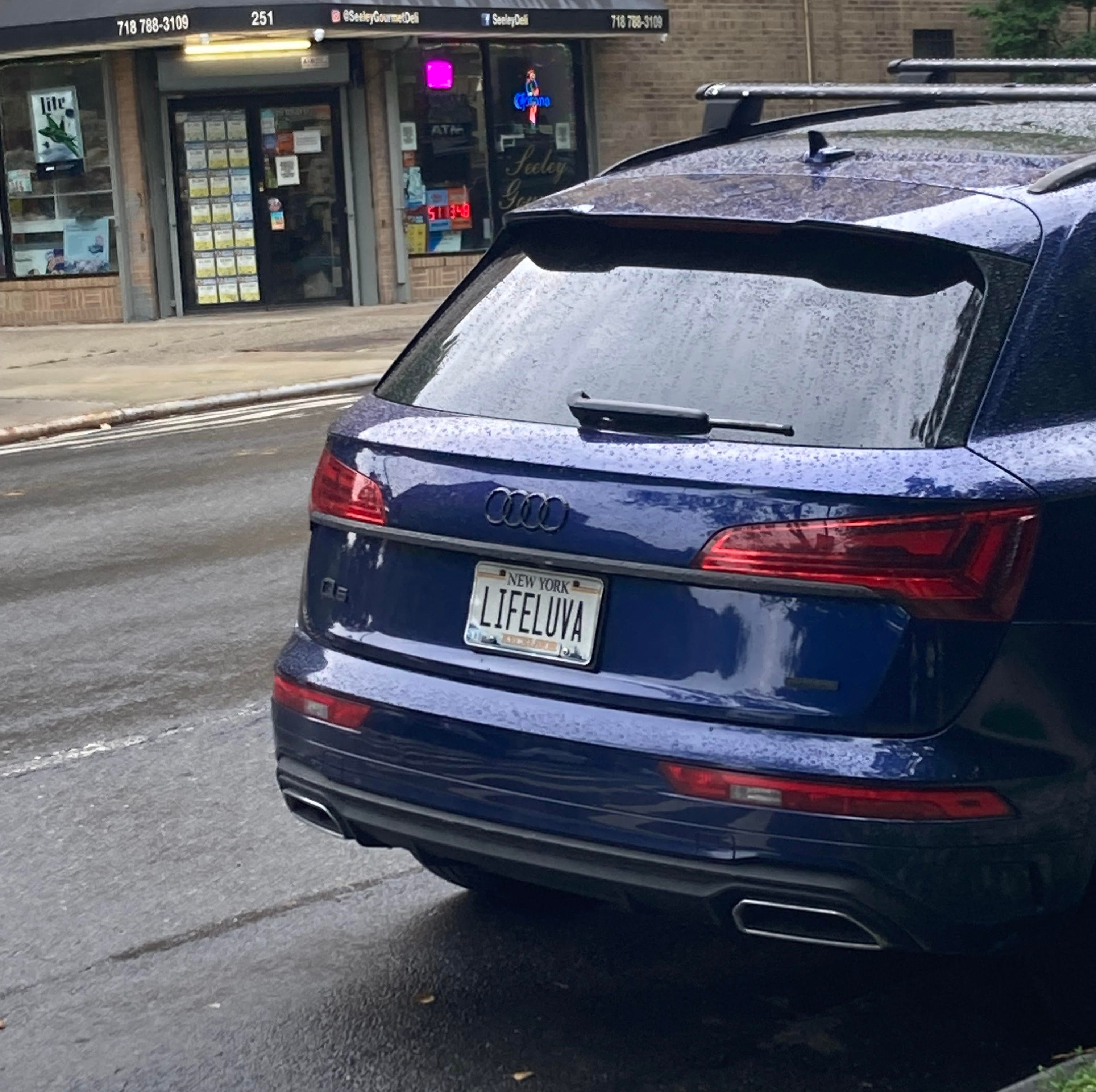
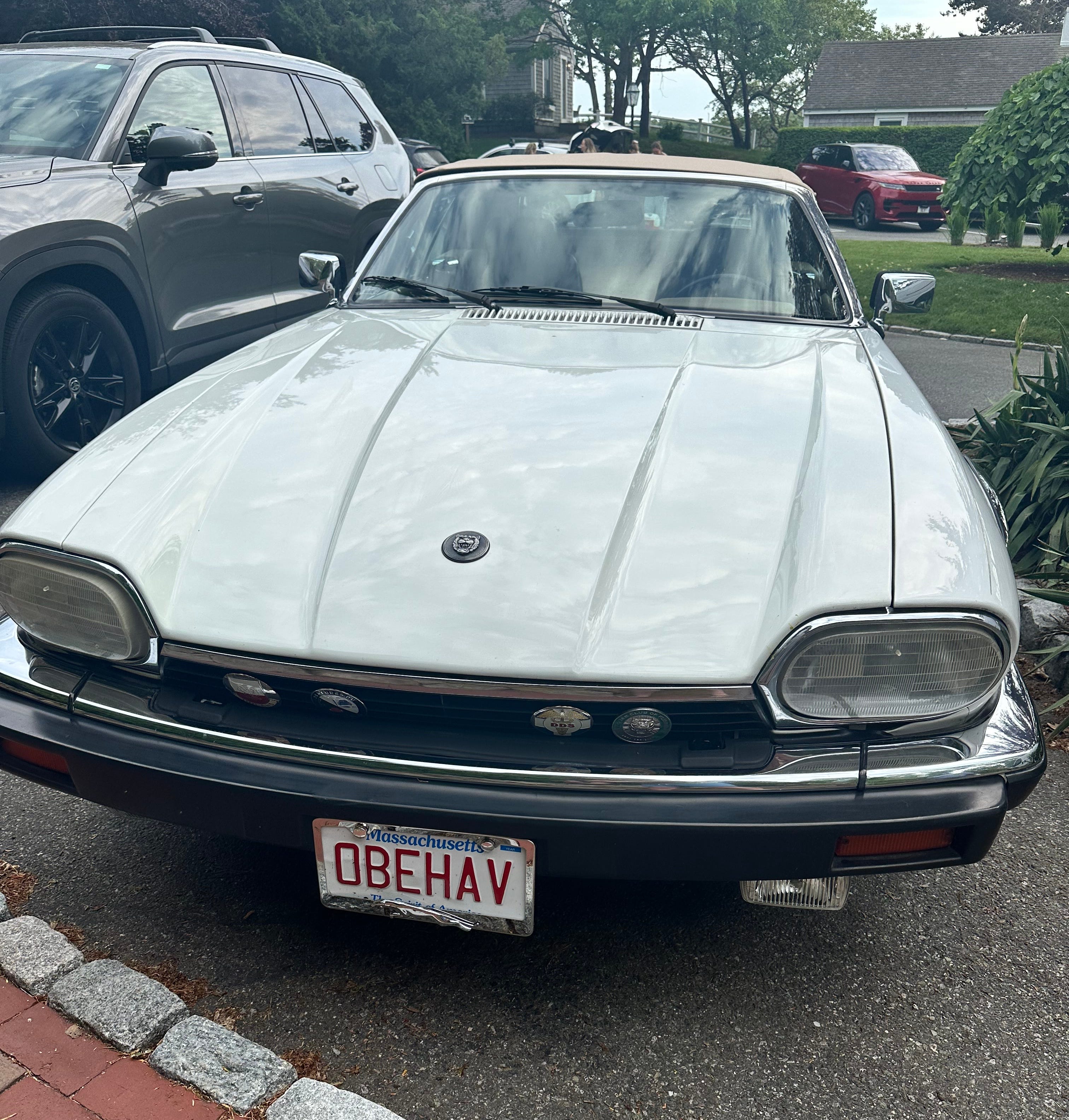
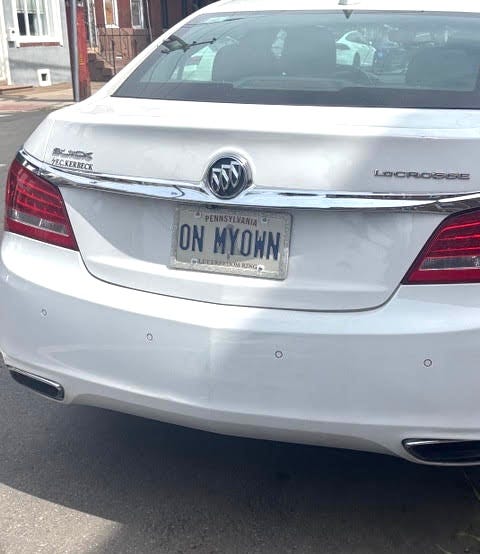
The streets are alive with language
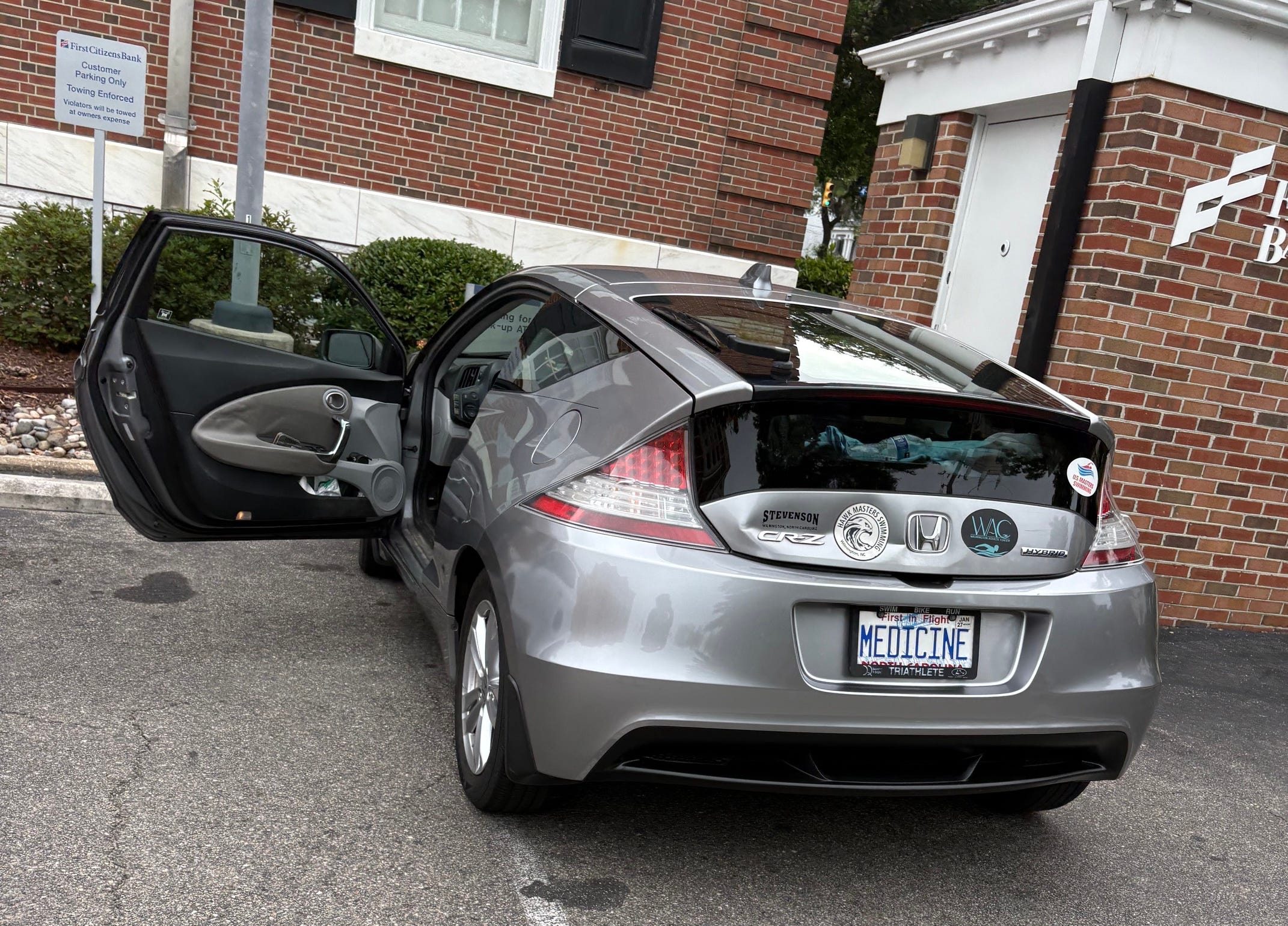
We’ll close out in the usual manner, with a dispatch from our national license plate correspondents. Thank you to Ava, Blair, Burke, Cassidy, Dana, Drew, Eric, Holly, Kevin, Lori, Margot, Meg, Nick and Tom.
As ever, keep your eyes peeled and send any favorites to mollybethyoung at gmail.com. The treasure hunt never ends.











Other links: zines + Instagram + the last long magazine piece I wrote (don’t worry another piece is coming soon and it is even more bludgeoningly long, like twice as long…start buffing your reading glasses)
Farewell,
Molly